Choppa Tools Choppa Tools

How to Choose the Best Car Tools for Your Trunk?

Time:2026-09-23 Author:Sienna
0%

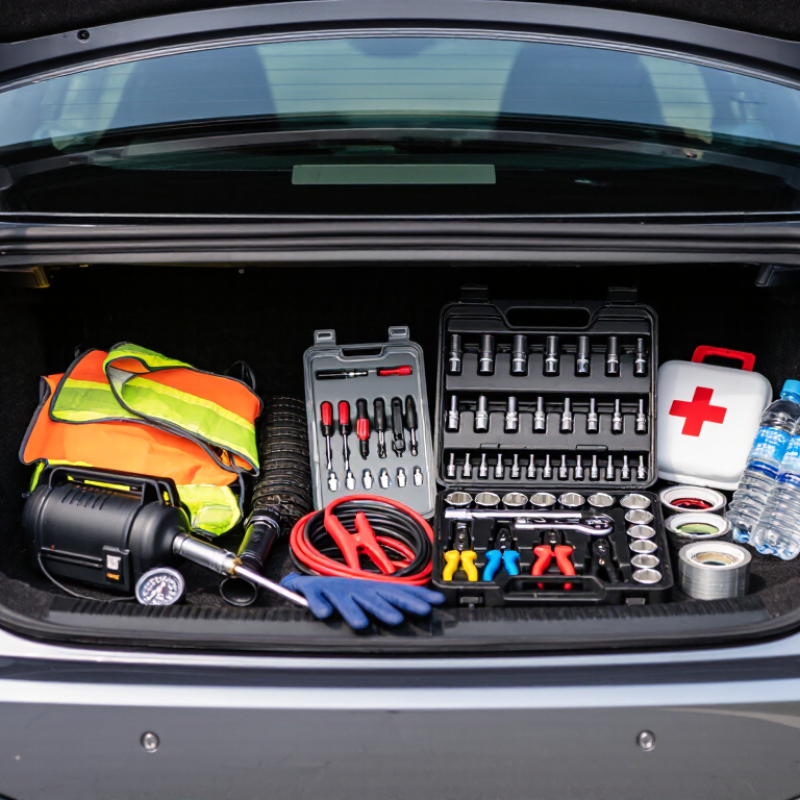
Choosing the right trunk tools begins with one honest question: what automotive tools should i keep in my trunk? The answer depends on your vehicle, driving habits, climate, and mechanical confidence. A compact tire inflator, pressure gauge, jumper cables, work gloves, flashlight, and reflective warning vest form a practical foundation. Add a tire plug kit only if you understand its limitations. It cannot repair every puncture.

Automotive educator Jason Fenske offers a useful principle: “Choose tools you can understand and use safely.” That advice matters more than carrying a heavy toolbox. A basic socket set, adjustable wrench, screwdrivers, pliers, zip ties, duct tape, and a multi-tool can handle loose panels or small roadside adjustments. Keep them in a sealed, organized case. A damp trunk can quietly ruin cheap tools. Test the flashlight before every long trip.

Your emergency setup should also include a first-aid kit, phone charger, bottled water, and a written roadside assistance number. These are not mechanical tools, but they can reduce stress when help is delayed. Battery boosters may be easier than traditional cables, although they require regular charging. Check yours monthly. I sometimes overlook that step, and that is exactly why it belongs on the checklist. Avoid carrying tools you cannot operate safely. A misplaced jack or overloaded trunk creates new problems. The best kit is useful, visible, and realistic for your experience.
How to Choose the Best Car Tools for Your Trunk?

Define Your Trunk Tool Needs and Driving Conditions

Choosing trunk tools starts with your real driving conditions, not a generic checklist. A city commuter may need a tire gauge, compact inflator, flashlight, gloves, and a phone charger. Rural drivers face longer gaps between services. Add a warning triangle, reflective vest, sturdy jack, and correctly sized lug wrench. In freezing weather, include an ice scraper and warm blanket. Hot climates may require extra drinking water and sun protection. Your vehicle handbook should guide jack points and tire pressures. Guessing can damage the car or injure you.

Tips: Inspect the trunk kit every month. Test the flashlight, check battery dates, and examine cables for cracks. Keep tools secured, so they do not become projectiles during sudden braking. Practice using the jack at home, on level ground. It feels simple until the wheel is stuck. Never change a tire beside fast traffic. Move to safety and request professional roadside help when conditions are dangerous.

Driving habits also shape your needs. Frequent night travel favors a headlamp and spare batteries. Gravel roads may justify emergency tire plugs, but only within their limits. A temporary repair still requires professional inspection. Snowy routes may need traction aids, while regular towing calls require recovery equipment rated for your vehicle. I once carried too many tools and left no room for groceries. That was poor planning. Now I choose compact, durable items and review the kit after each trip.

Identify the Essential Tools for Common Roadside Problems

The best trunk kit is built around problems you can realistically face, not an impressive tool count. AAA roadside assistance data indicates that roughly 30 million U.S. drivers need help each year. A dead battery, flat tire, low tire pressure, or poor visibility can quickly create danger.

Carry a properly rated jack, lug wrench, tire-pressure gauge, and compact air compressor. Add jumper cables or a charged jump starter, work gloves, a flashlight, and spare batteries. A reflective vest and warning triangles help other drivers notice you. NHTSA tire-safety materials cite about 664 deaths and 33,000 injuries annually from tire-related crashes, so inspect tire pressure before driving and avoid changing a tire beside fast traffic. Call professional assistance when the shoulder is narrow or visibility is poor.

I used to pack too many tools. It was not practical. A basic socket set, pliers, adjustable wrench, and heavy-duty tape can handle minor, safe adjustments. Include a phone charging cable and a written emergency contact card, because electronics can fail. Keep water and a first-aid kit nearby, but do not treat serious injuries yourself. Check the compressor, flashlight, and jump starter every few months. Batteries deteriorate quietly. The perfect kit does not exist; mine still needs better organization. Store heavy items securely, and keep the jack accessible rather than buried under luggage.

How to Choose the Best Car Tools for Your Trunk? - Identify the Essential Tools for Common Roadside Problems

Common Roadside Problem Essential Tool Primary Function Recommended Specifications Typical Weight Priority Important Safety or Selection Notes
Flat or underinflated tire 12-volt Tire Inflator Restores tire pressure until the tire can be inspected or repaired. Digital pressure display; automatic shutoff; 12-volt vehicle outlet; hose length of at least 60 cm 1.5–2.5 kg Essential Check the vehicle’s recommended tire pressure before inflating. An inflator cannot safely repair a damaged sidewall or severely separated tire.
Flat tire requiring wheel removal Vehicle Jack and Lug Wrench Lifts the vehicle and loosens or tightens the wheel fasteners. Load rating above the vehicle’s curb weight; correct socket size; stable base; telescoping or cross-style wrench 3–8 kg combined Essential Use only on firm, level ground and place the jack at the manufacturer-designated lifting point. Never work beneath a vehicle supported only by a jack.
Wheel puncture Tire Plug Repair Kit Temporarily seals a small puncture in the tread of a tubeless tire. Reaming tool; insertion tool; rubber plugs; tire lubricant; compact storage case 0.3–0.7 kg Recommended Designed only for temporary tread repairs where legally and technically permitted. Do not use for sidewall damage or large punctures.
Dead or weak 12-volt battery Portable Jump Starter Provides temporary starting power without another vehicle. 12-volt output; reverse-polarity protection; short-circuit protection; peak current suitable for the engine size 0.8–1.5 kg Essential Confirm compatibility with the engine type and size. Keep the unit charged and follow the correct connection sequence in the vehicle manual.
Battery terminals needing attention Battery Terminal Brush Removes light corrosion and residue from battery terminals and clamps. Nonconductive handle; corrosion-resistant bristles; compact cylindrical or dual-ended design 0.1–0.2 kg Recommended Switch off the vehicle before cleaning. Wear eye protection and avoid touching both terminals with a conductive tool.
Vehicle stuck in mud, snow, or loose gravel Traction Boards Provide a grippy surface under the drive wheels. Pair of rigid, high-grip boards; length of approximately 60–90 cm; load capacity above the vehicle’s axle load 3–6 kg per pair Recommended Clear loose material from in front of the tires and use gentle acceleration. Do not stand directly in the path of a spinning wheel.
Vehicle recovery after becoming stuck Recovery Strap and Soft Shackles Connects a suitable recovery point to another vehicle or recovery device. Rated minimum breaking strength appropriate for the vehicle; abrasion-resistant strap; clearly marked recovery points 1–3 kg Optional Use only rated recovery points, not tow balls or suspension parts. Recovery should be performed by trained people using a controlled pull.
Minor mechanical failure or loose component Compact Hand Tool Set Handles basic tightening, removal, and adjustment tasks. Metric sockets; ratchet; combination wrenches; screwdrivers; pliers; hex keys 2–5 kg Essential Choose metric tools for most modern vehicles, but verify the fastener sizes used in the specific vehicle. Do not attempt repairs involving high-voltage systems.
Temporary hose, belt, or panel problem Utility Knife and Adjustable Pliers Cuts tape or bands and grips small components during temporary roadside work. Locking blade; insulated handles; adjustable jaw; corrosion-resistant construction 0.3–0.6 kg combined Recommended Keep the blade closed when stored. Allow hot engine components to cool before handling nearby hoses or clamps.
Broken hose or minor fluid leak Heavy-Duty Repair Tape and Cable Ties Provides a temporary wrap, tie, or positioning solution. Water-resistant tape; heat-tolerant material; assorted cable-tie lengths and strengths 0.2–0.5 kg Recommended These items are temporary aids only. Do not use tape as a permanent repair for pressurized, fuel, brake, or high-temperature systems.
Nighttime breakdown or poor visibility Rechargeable Work Light Illuminates the engine bay, tire area, and surrounding ground. 300–600 lumens; magnetic base or hook; water-resistant housing; runtime of at least 3 hours 0.2–0.6 kg Essential Recharge it regularly and keep a backup lighting mode available. Avoid directing bright light toward approaching drivers.
Vehicle stopped on the roadside Warning Triangle and Reflective Vest Improves the vehicle’s visibility and alerts approaching traffic. Reflective warning triangle; high-visibility vest; compact folding storage 0.5–1.5 kg combined Essential Placement requirements vary by location. Follow local traffic laws and remain away from moving traffic whenever possible.
Minor cuts, burns, or splinters Automotive First-Aid Kit Provides basic supplies for minor injuries while waiting for assistance. Sterile dressings; adhesive bandages; antiseptic wipes; gloves; gauze; scissors; emergency blanket 0.4–1.0 kg Essential Check expiry dates and replace used supplies. Call emergency services for serious bleeding, burns, fractures, or suspected spinal injuries.
Cold, rain, or extended roadside wait Emergency Blanket and Work Gloves Helps retain body heat and protects hands during basic tasks. Reflective thermal blanket; abrasion-resistant gloves; water-resistant outer layer; multiple sizes if needed 0.2–0.7 kg combined Essential Select gloves that preserve finger movement and avoid loose fabric near rotating components. Store the blanket in a sealed pouch.
Loss of navigation or communication Charging Cable and Power Bank Keeps a phone available for navigation, roadside assistance, and emergency calls. Capacity of approximately 10,000–20,000 mAh; compatible charging connectors; battery-level indicator 0.2–0.5 kg Essential Recharge the power bank periodically and do not leave lithium battery packs in extreme heat for long periods.
Fluids or debris inside the vehicle Absorbent Towels and Disposable Gloves Supports clean handling of fluids, dirt, and small roadside repairs. Oil-absorbent towels; nitrile gloves; resealable waste bags; several glove sizes 0.3–0.8 kg Recommended Dispose of contaminated materials according to local rules. Do not touch battery acid, fuel, or unknown chemicals without suitable protection.

Compare Tool Quality, Size, Weight, and Ease of Use

When choosing car tools for your trunk, compare quality before chasing the lowest price. A solid ratchet should turn smoothly, while sockets need clean edges and accurate sizing. Cheap metal can bend under pressure, leaving you stranded beside a dark road. I learned this after carrying a compact wrench that slipped on a stubborn battery clamp. It looked useful. It was not.

Size and weight matter every day, not only during emergencies. A bulky tool case can steal space from groceries or luggage. A lightweight kit is easier to carry, but extremely light tools may feel weak. Look for corrosion-resistant materials, comfortable grips, and a case that closes securely. Check each tool with your hands before storing it. Can you read the size markings? Can you operate it while wearing thin gloves? Ease of use becomes important when rain hits the trunk floor. Choose tools that fit common fasteners on your vehicle, and confirm measurements in the owner’s manual. Some kits include many pieces, yet several may never fit your car. I prefer a smaller kit with dependable basics, though I sometimes underestimate the value of one extra adapter. Keep a flashlight and work gloves nearby.

Choose a Safe and Organized Trunk Storage System

How to Choose the Best Car Tools for Your Trunk?

A safe trunk storage system begins with control, not quantity. According to the AAA Foundation’s 2017 roadside breakdown analysis, about 32 million U.S. drivers faced a breakdown in one year. That figure supports carrying practical tools, but careless packing can create new hazards. Choose a rigid, lidded organizer with adjustable sections and a non-slip base. Keep the tire inflator, pressure gauge, flashlight, gloves, and first-aid kit visible and reachable. Keep it reachable.

Heavy tools should sit low and close to the seatback. This reduces movement during sudden braking. The National Highway Traffic Safety Administration advises securing loose objects because they can become dangerous projectiles in a crash. A 2022 NHTSA report recorded 42,514 U.S. roadway deaths, reminding drivers that small safety decisions deserve attention. Avoid stacking equipment above the cargo cover. Check that the trunk can still close fully.

I would not fill every empty space. An overloaded kit becomes difficult to inspect and may hide damaged cables, expired supplies, or weak batteries. Review it each season, especially before long trips. Test the flashlight. Check tire-seal dates. Small details matter. A reflective vest, warning device, and work gloves should remain dry and separate from leaking fluids. The best system is not perfect. It is simple enough to use under stress and honest about its limits.

Review, Maintain, and Replace Your Car Tools Regularly

Choosing the best car tools for your trunk starts with the jobs you may realistically face. A tire pressure gauge, compact flashlight, work gloves, reflective vest, and basic socket set cover many roadside needs. Your vehicle’s manual should guide jack selection and lifting points. A tool that fits poorly can damage fasteners or cause injury.

Review the kit every month, and inspect it before long trips. Check the flashlight battery, cable insulation, socket edges, and tire gauge accuracy. Look for rust, loose handles, cracked plastic, or missing pieces. Wipe tools dry after use. Moisture trapped beneath a tool tray can quietly create corrosion. Keep heavy equipment secured, so it does not move during sudden braking.

Replace damaged tools without hesitation. A bent jack, leaking hydraulic bottle, or frayed cable is not a reliable backup. Select equipment with a suitable load rating and dimensions for your vehicle. I once kept an old flashlight because it still turned on. Its weak beam failed beside a dark roadside, which changed my maintenance habits. Still, some kits become overloaded with gadgets nobody checks. Practical tools matter more than a crowded trunk. A qualified mechanic can verify uncertain equipment, especially lifting tools. Inspect the kit again after every emergency use. You may discover one small problem too late.

FAQS

What basic tools should most drivers keep in the trunk?

Carry a tire gauge, compact inflator, flashlight, gloves, and phone charging cable. Add a properly rated jack and lug wrench. Keep a warning triangle and reflective vest nearby. Simple works.

How should trunk tools match driving conditions?

City drivers may need compact tools for common problems. Rural drivers may need extra water, visibility gear, and a stronger jack. Snowy routes require traction aids and an ice scraper. Night travel favors a headlamp and spare batteries.

What should drivers check before changing a tire?

Read the vehicle handbook first. Confirm the correct jack points and tire pressure. Park on level ground, away from fast traffic. Never guess.

When should a driver request roadside assistance?

Request help when the shoulder is narrow, traffic moves quickly, or visibility is poor. Avoid repairs beside moving vehicles. Safety matters more than finishing quickly.

How can drivers maintain a trunk emergency kit?

Inspect the kit monthly. Test the flashlight and check battery dates. Examine cables for cracks. Confirm the compressor still works. Replace damaged items promptly.

What makes a car tool reliable?

Choose corrosion-resistant materials, comfortable grips, and accurate size markings. A ratchet should turn smoothly. Sockets should fit firmly. Cheap metal may bend under pressure.

How can drivers save trunk space without losing useful tools?

Choose compact, durable basics instead of oversized sets. A small socket set, pliers, adjustable wrench, and strong tape handle minor adjustments. Store heavy items securely. I once carried too much and lost space for groceries.

Are temporary tire repairs always safe for continued driving?

No. Temporary plugs have limits and may not suit every tire. Use them only as directed, then arrange professional inspection. I sometimes trusted quick fixes too much. That needs reconsideration.

Conclusion

Choosing the best car tools for your trunk begins with understanding your driving habits, vehicle condition, local weather, and the types of roads you commonly use. Ask yourself, “what automotive tools should i keep in my trunk?” A practical selection may include a tire pressure gauge, portable inflator, jumper cables or a power starter, flashlight, work gloves, basic hand tools, reflective warning items, and a first-aid kit. Select equipment that is durable, compact, lightweight, and simple to operate, even in stressful roadside situations.

Organization is equally important. Use a secure storage container or separate compartments to prevent tools from moving around while driving and to keep emergency items easy to find. Avoid overloading the trunk, and make sure heavy equipment is safely positioned. Inspect your tools regularly, recharge electronic devices, check batteries, clean metal surfaces, and replace anything damaged or expired. A well-planned and maintained trunk kit can improve preparedness, reduce inconvenience, and support safer responses to common vehicle problems.

Sienna

Sienna

Sienna is a skilled marketing professional with a deep expertise in our company’s core products and services. With a passion for innovation and detail, she plays a pivotal role in crafting insightful blog posts that not only highlight the unique features of our offerings but also provide valuable......